Better Ways to Say Thank You for Your Patience

Thank you for your patience is polite, but it can sound generic when you use it too often. These alternatives help you sound more specific, more natural, and more professional.
 Ahmad Waheed
Thank you for your patience is polite, but it can sound generic when you use it too often. These alternatives help you sound more specific, more natural, and more professional.
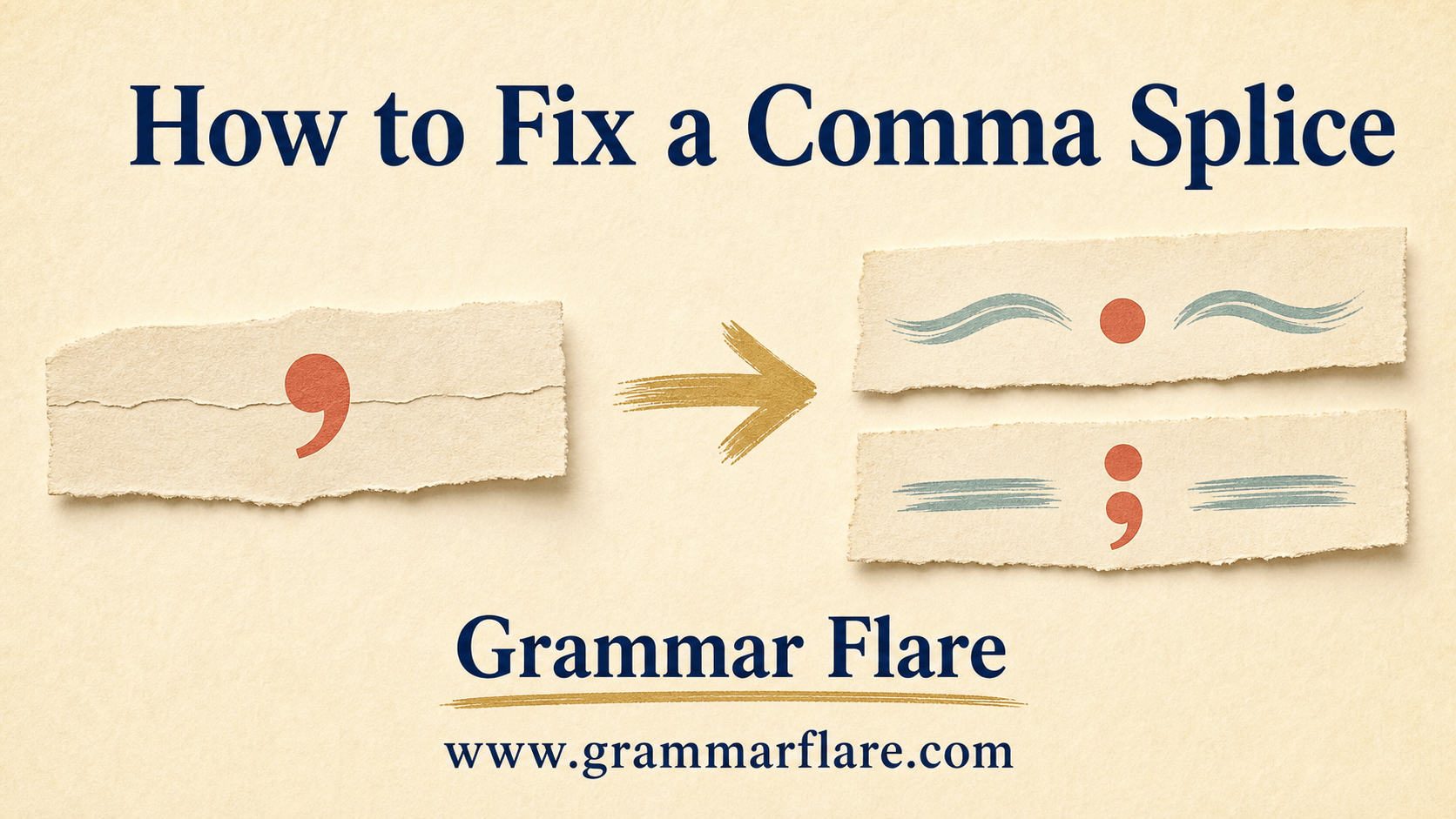
A comma splice happens when two complete sentences are joined with only a comma. This guide explains the problem, shows fast fixes, and gives clear examples you can use right away.
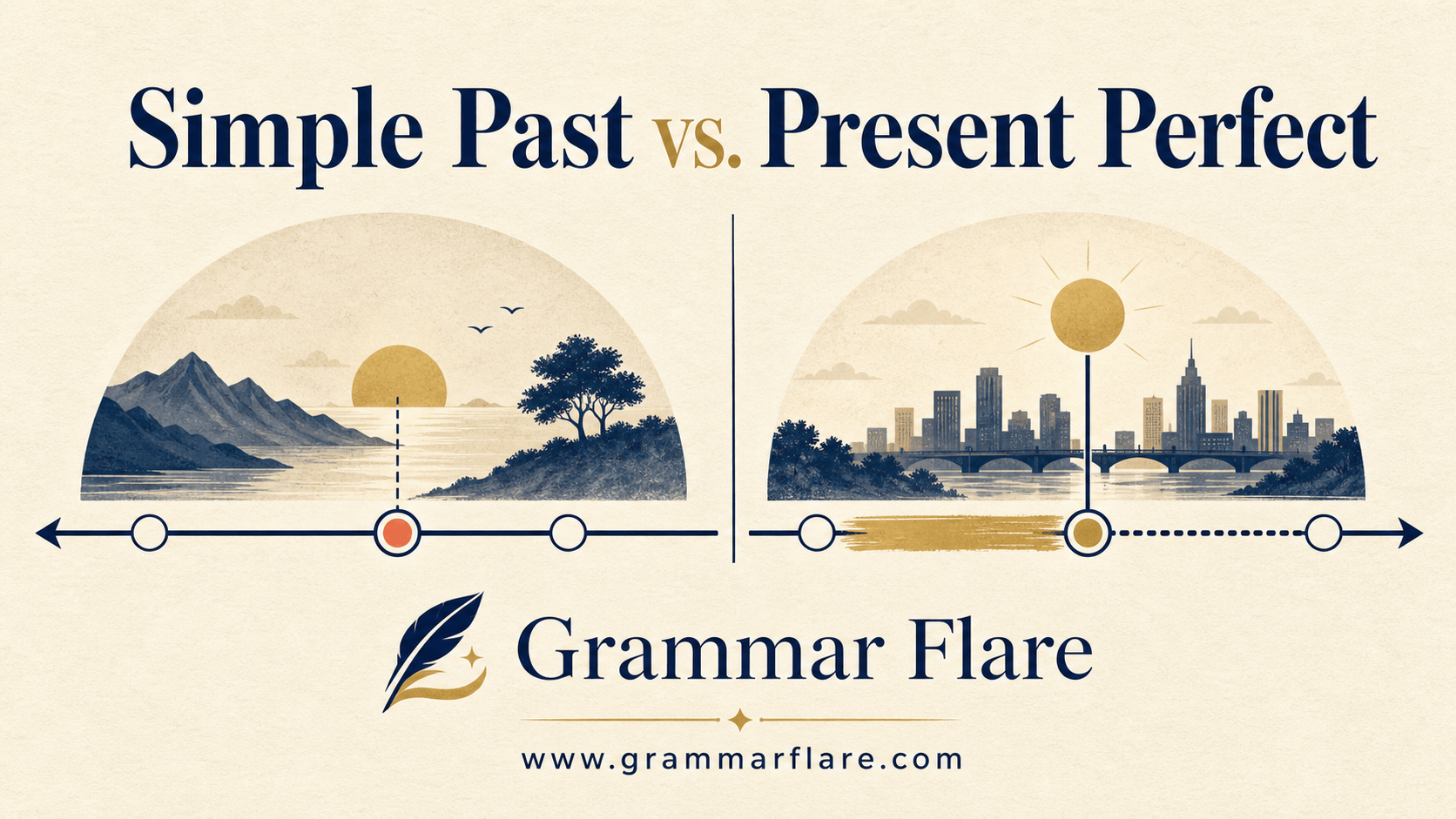
Confused about simple past and present perfect? Learn when to use each tense, what the time difference means, and how to avoid common mistakes.
One rule decides almost every colon: the words before it must stand alone as a sentence. Here is that rule, the exceptions, and where the style guides disagree.
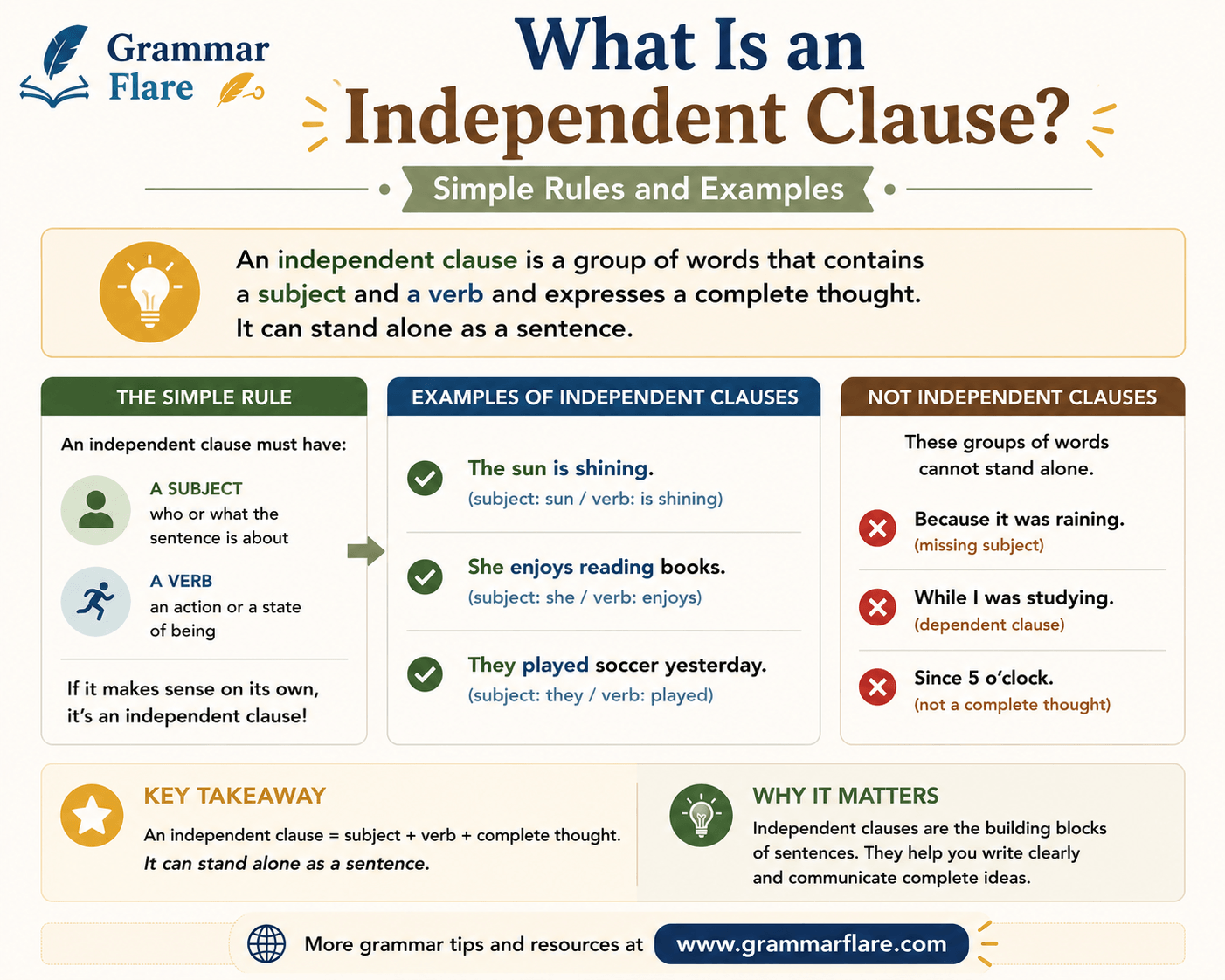
An independent clause has a subject, a verb, and a complete thought. Learn how independent clauses work, how to identify them, and how they differ from dependent clauses.

The plural of hoof can be `hooves` or `hoofs`, but one form is much more common. This guide explains the difference, shows examples, and helps you choose the best form for everyday writing.

A complex sentence has one independent clause and at least one dependent clause. Learn the rule, see examples, avoid common mistakes, and practice writing complex sentences clearly.
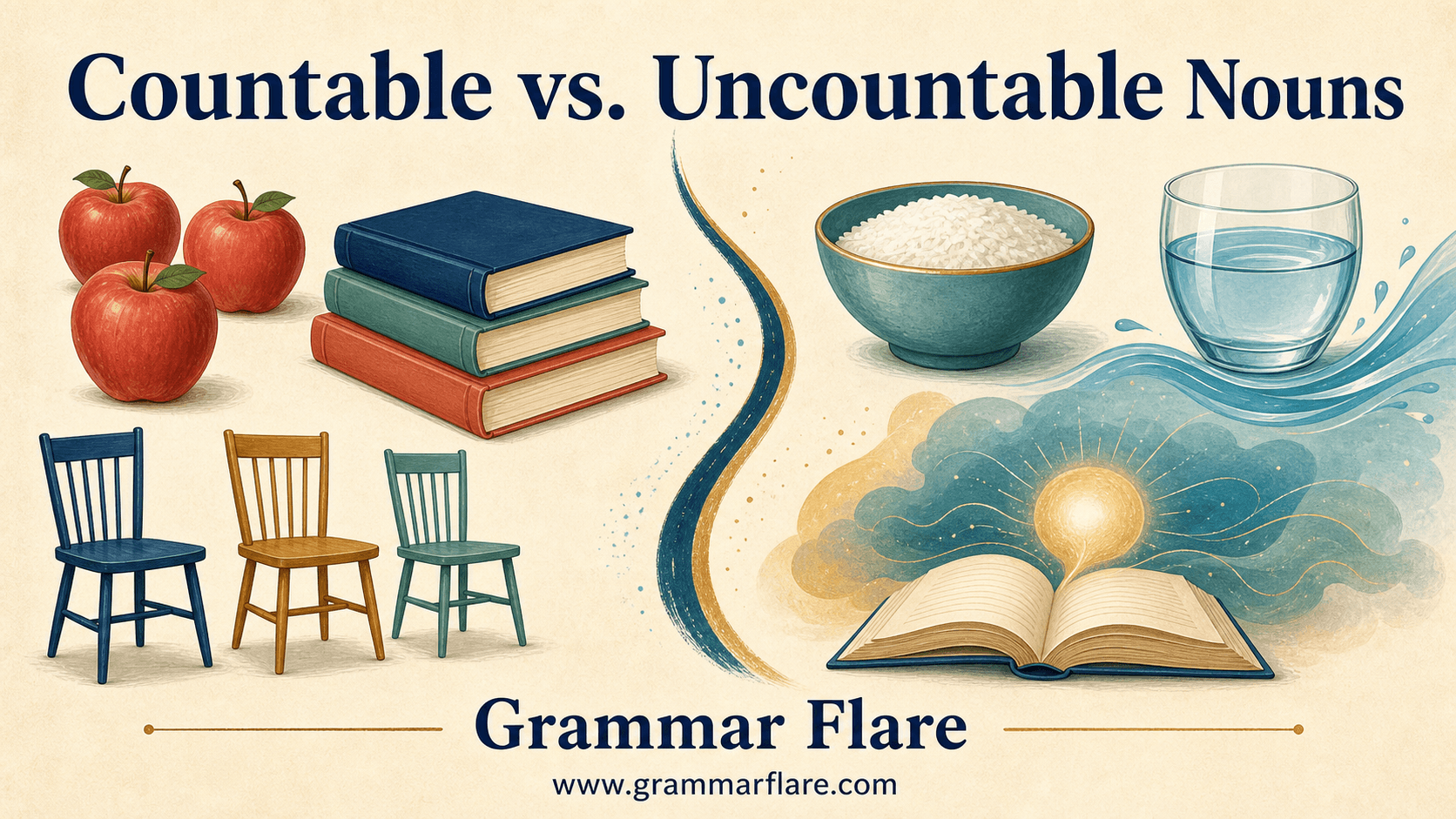
Countable nouns can be counted one by one. Uncountable nouns are treated as masses, ideas, or substances. This guide shows the difference with clear examples and quick rules.
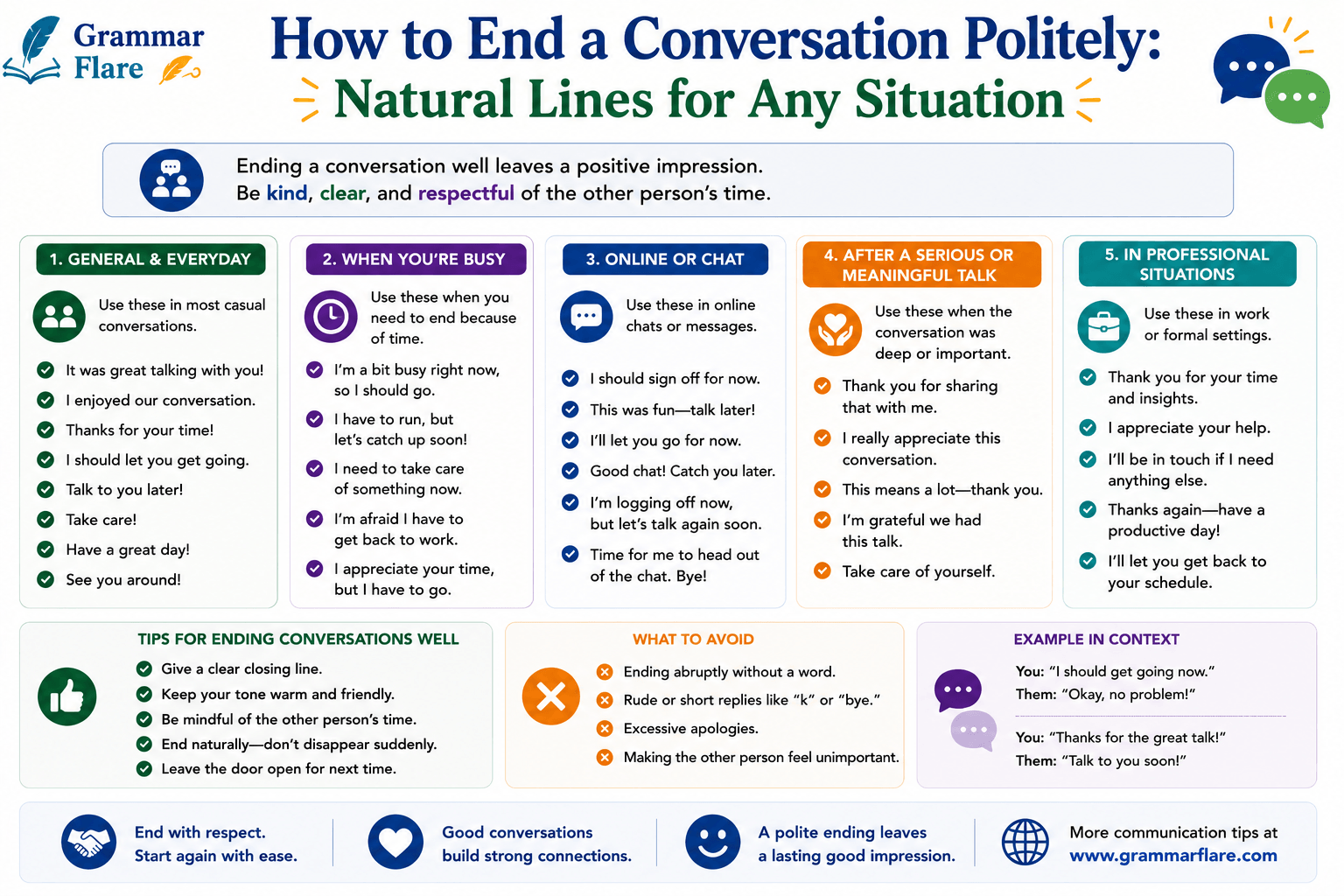
Ending a conversation politely is easier when you use one simple pattern: show warmth, give a reason, and close clearly. These natural lines make that easier.
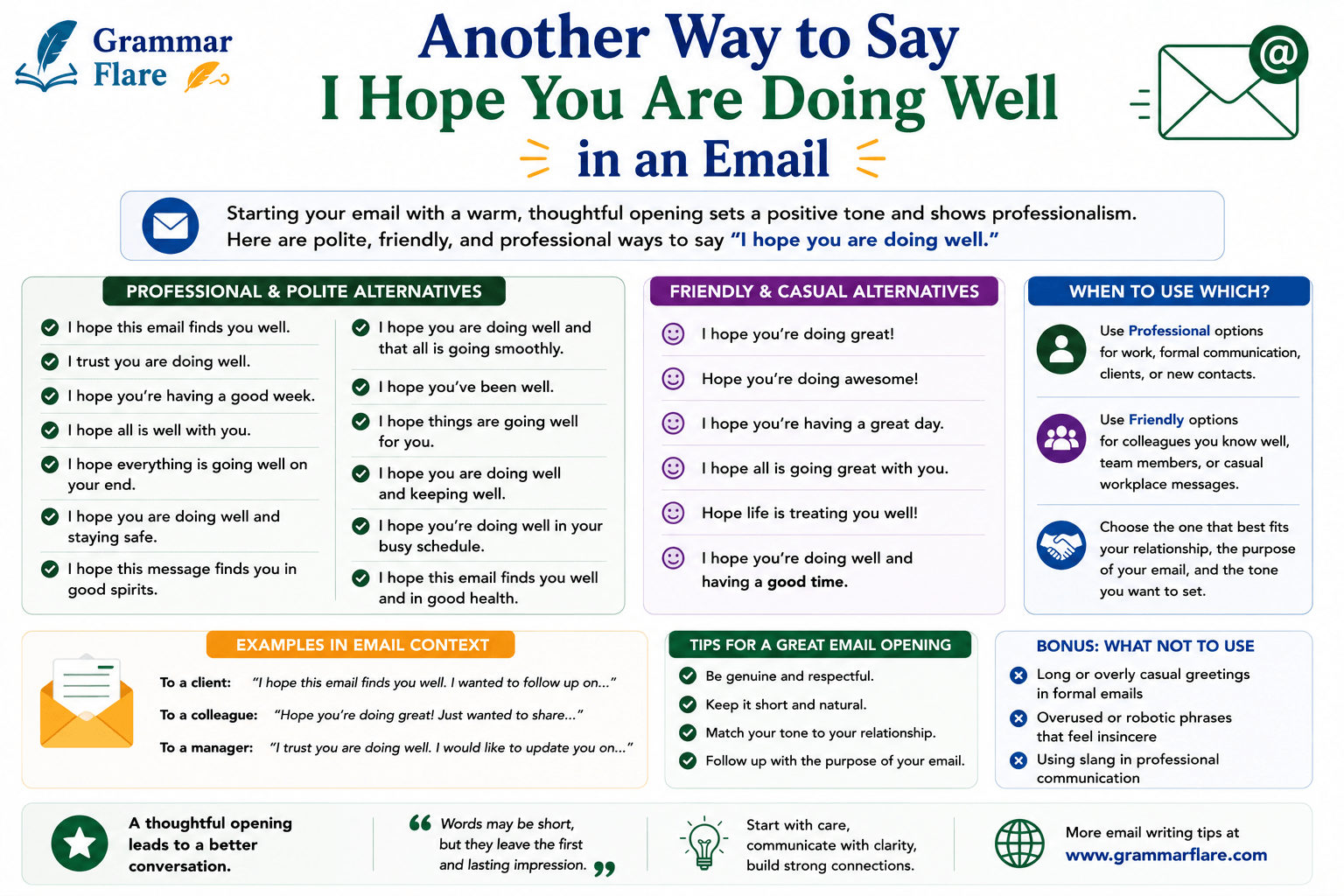
Looking for another way to say I hope you are doing well? These professional and natural email openings help you sound warmer, clearer, and less repetitive.