Simple Past vs Present Perfect: Easy Rules and Examples
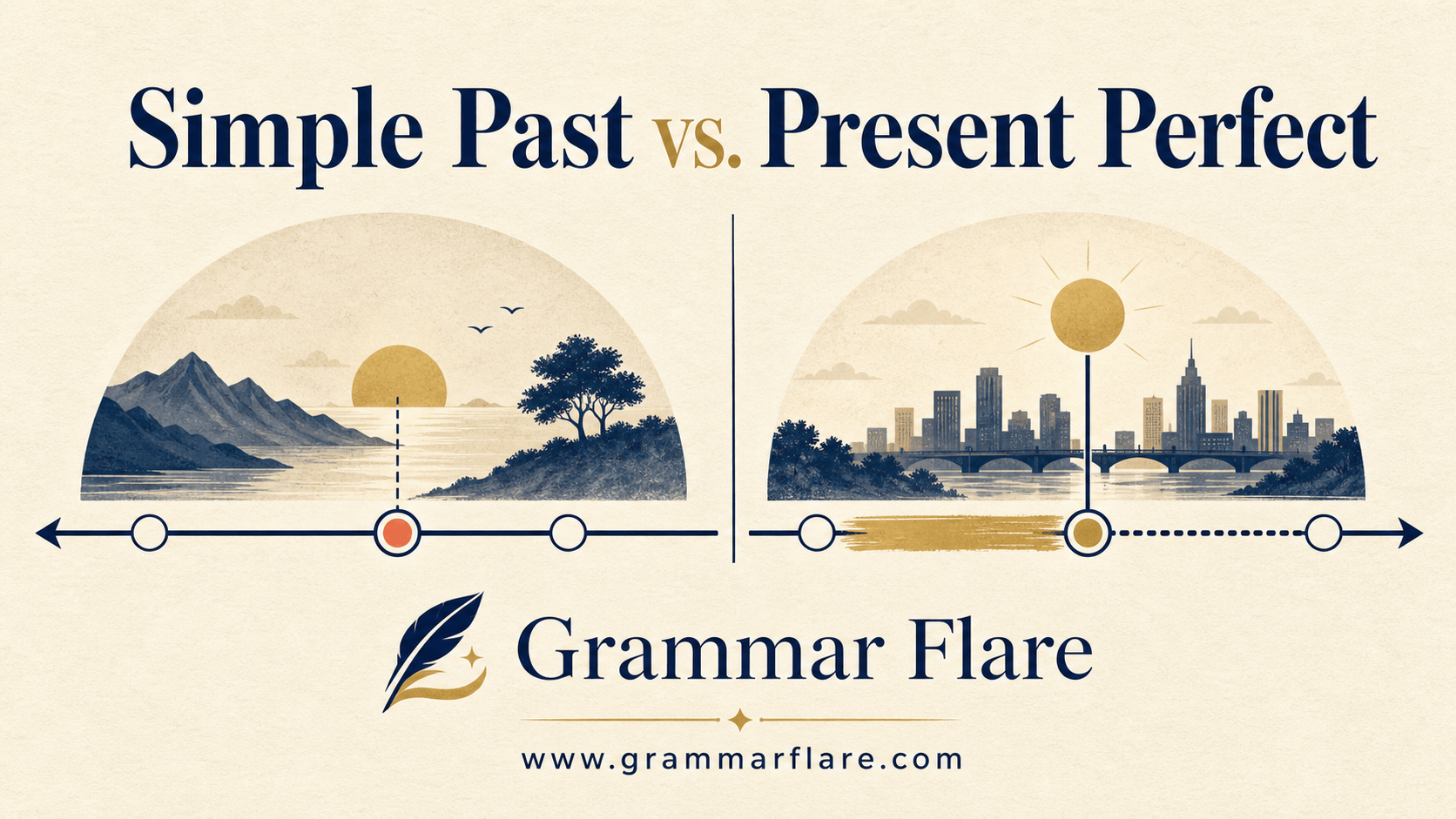
Confused about simple past and present perfect? Learn when to use each tense, what the time difference means, and how to avoid common mistakes.
Grammar Basics is your starting point for learning clear, correct, and confident English. This category covers the essential rules every writer needs, including punctuation, sentence structure, word choice, common grammar mistakes, and confusing grammar terms explained in simple language. Whether you’re writing an email, blog post, essay, or everyday message, these guides help you understand the rule, see real examples, and use the correct form without overthinking it. Start here to build a strong grammar foundation and make your writing cleaner, sharper, and easier to read.
Confused about simple past and present perfect? Learn when to use each tense, what the time difference means, and how to avoid common mistakes.
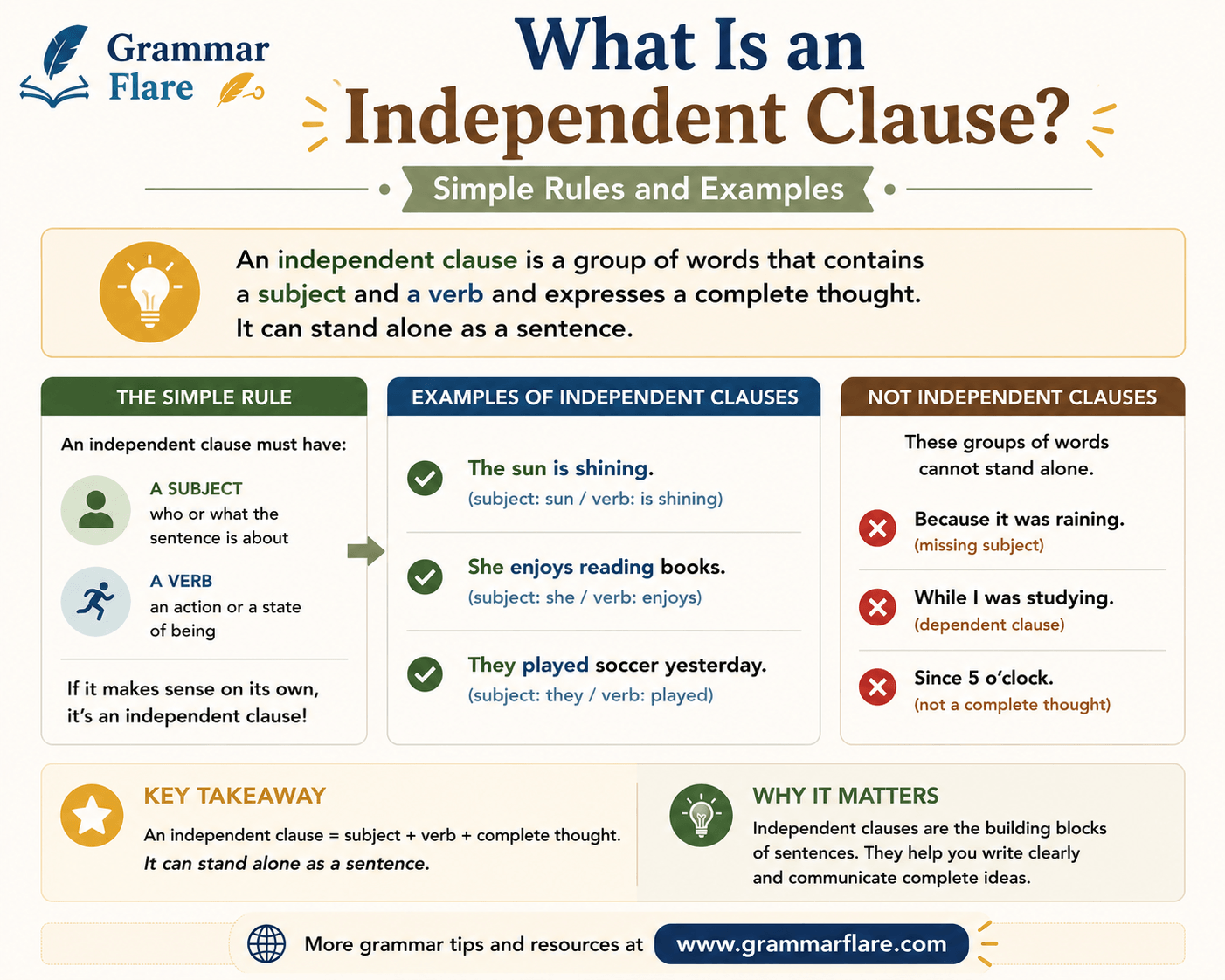
An independent clause has a subject, a verb, and a complete thought. Learn how independent clauses work, how to identify them, and how they differ from dependent clauses.

A complex sentence has one independent clause and at least one dependent clause. Learn the rule, see examples, avoid common mistakes, and practice writing complex sentences clearly.
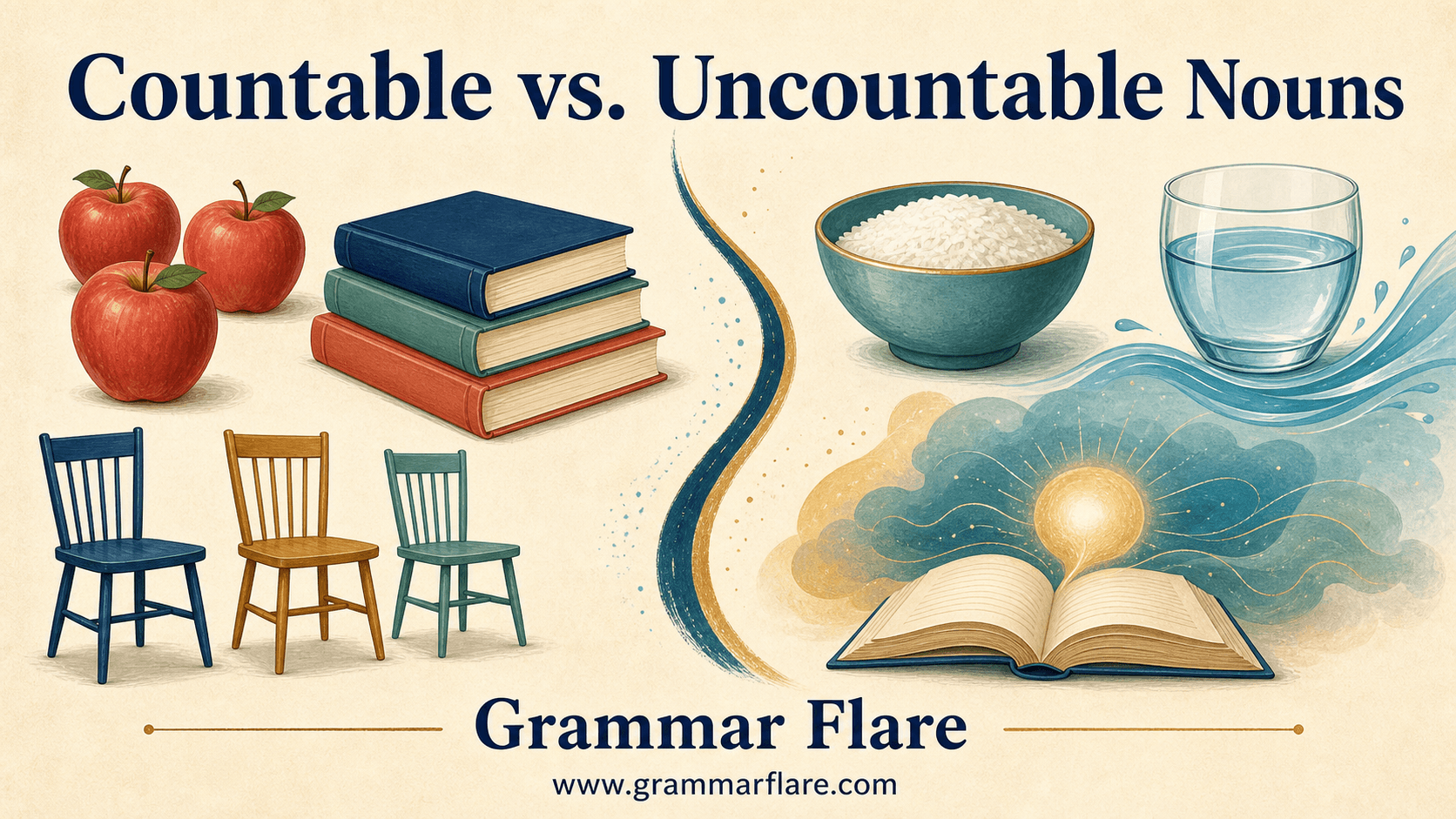
Countable nouns can be counted one by one. Uncountable nouns are treated as masses, ideas, or substances. This guide shows the difference with clear examples and quick rules.
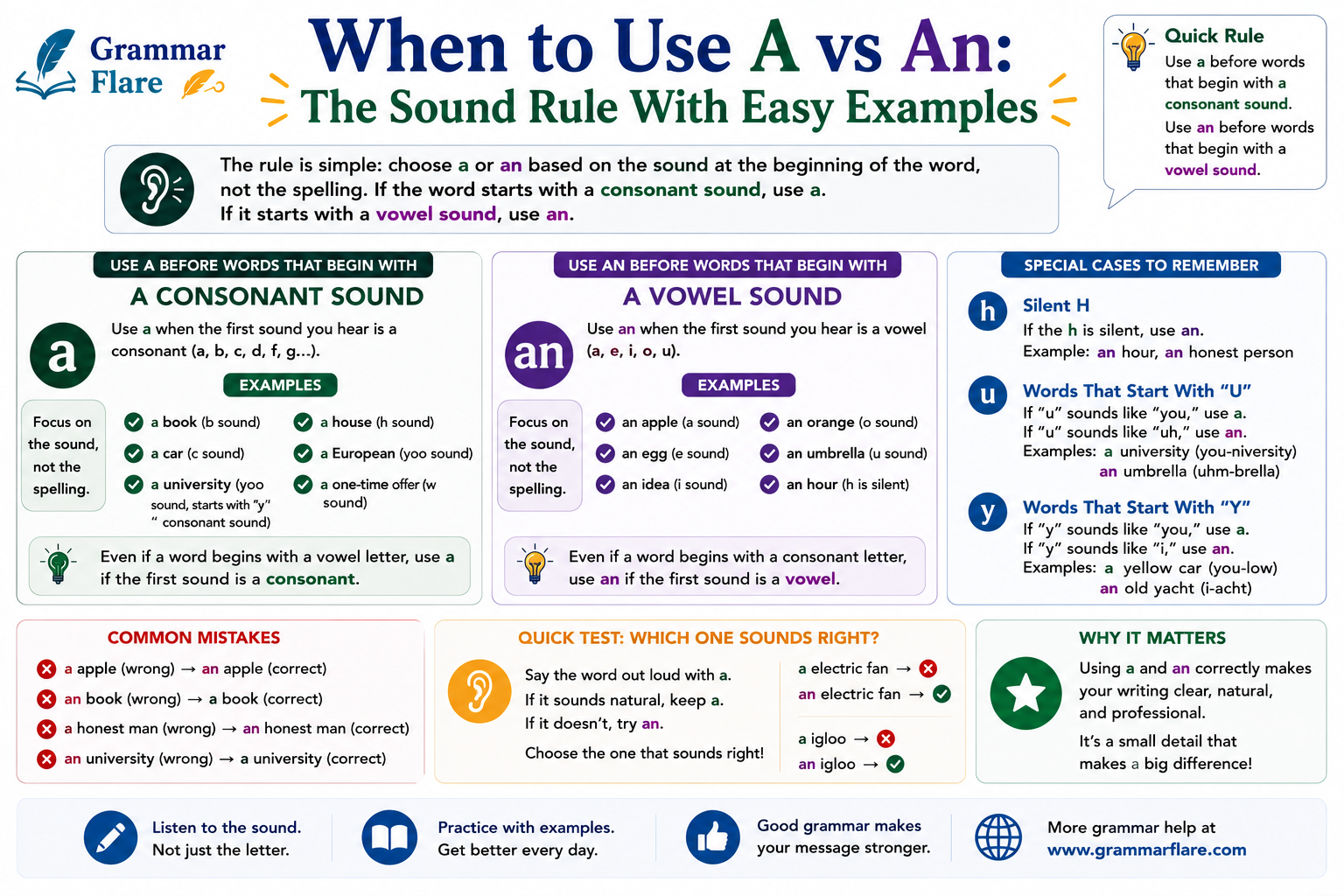
The rule for a and an is about sound, not spelling. This guide explains the difference with easy examples, tricky cases, and a fast checklist you can use right away.

Subject-verb agreement means your subject and verb must match in number. This guide shows the core rule, the common exceptions, and the quickest way to catch mistakes.
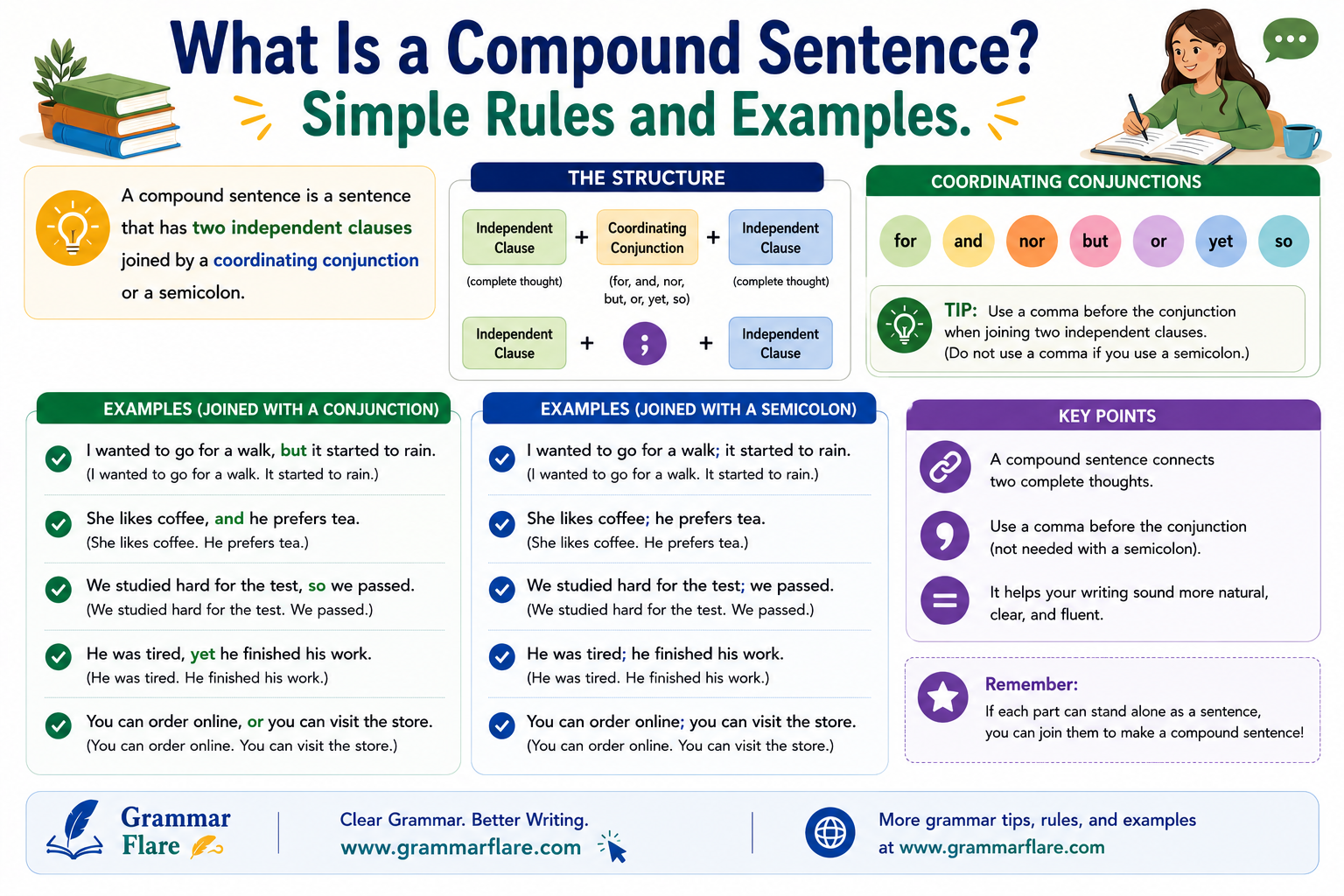
A compound sentence has two or more independent clauses joined by a comma and coordinating conjunction, a semicolon, or another correct punctuation pattern. Learn the simple rule with examples, mistakes, and practice exercises.
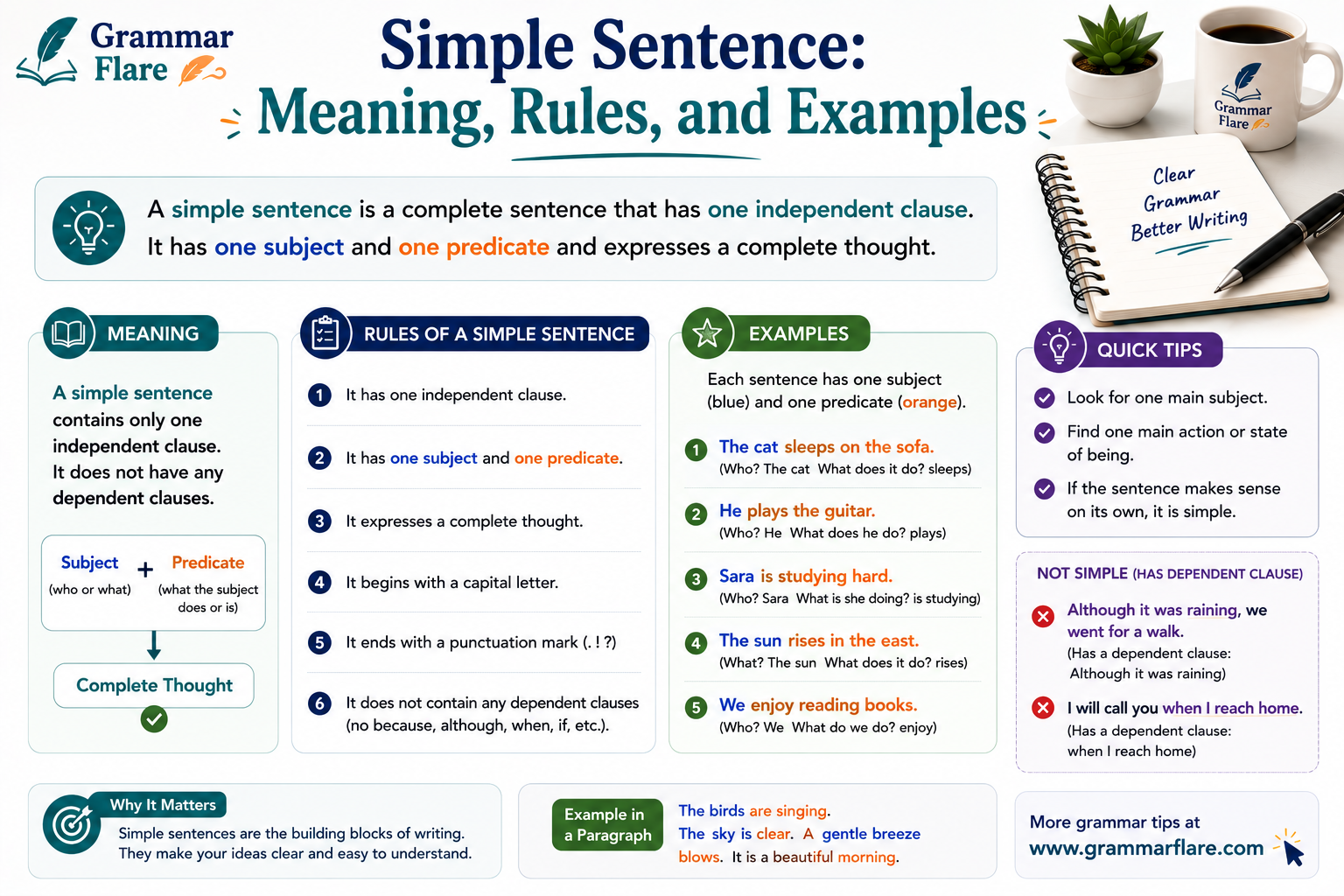
A simple sentence has one independent clause and expresses one complete thought. Learn the simple rule, see clear examples, and practice identifying simple sentences.
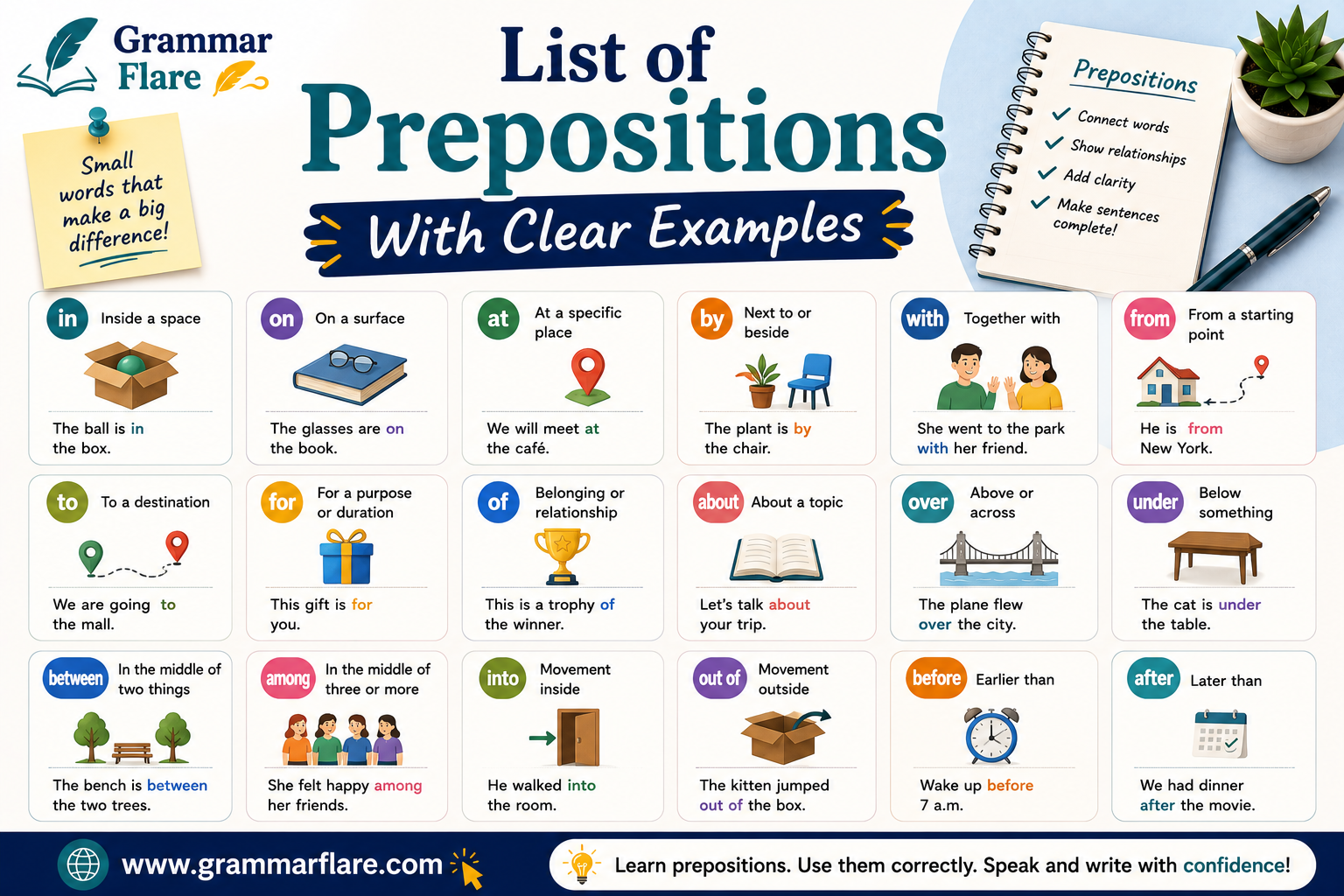
Need a simple list of prepositions? This guide explains what prepositions do, gives common examples by category, and shows how to use them in clear sentences.
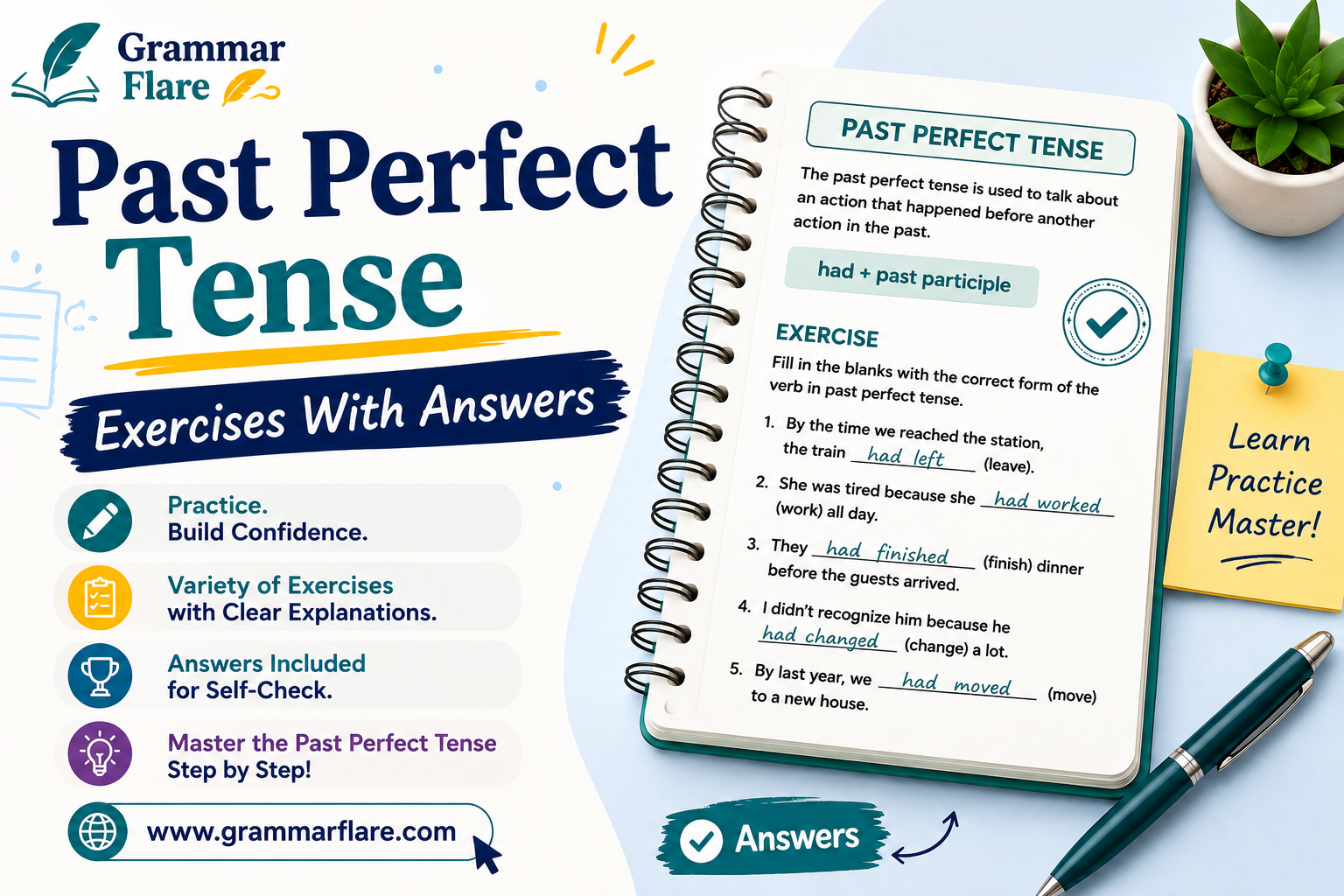
The past perfect tense shows that one past action happened before another past action. Learn the simple rule, see clear examples, and practice with past perfect tense exercises with answers.